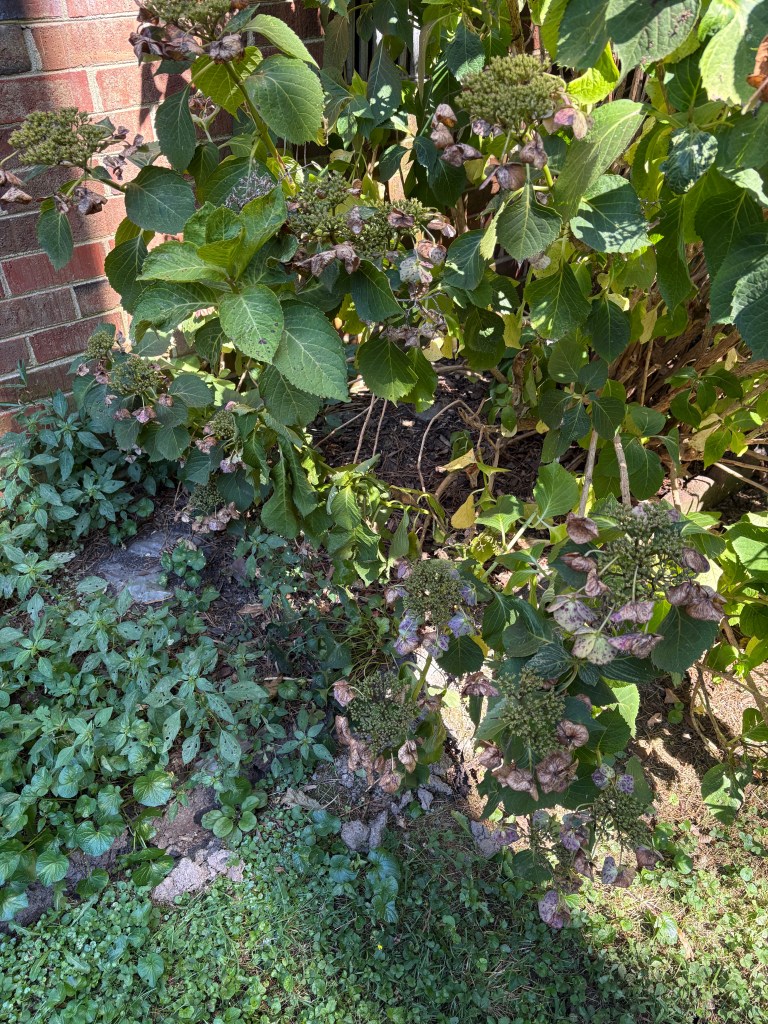
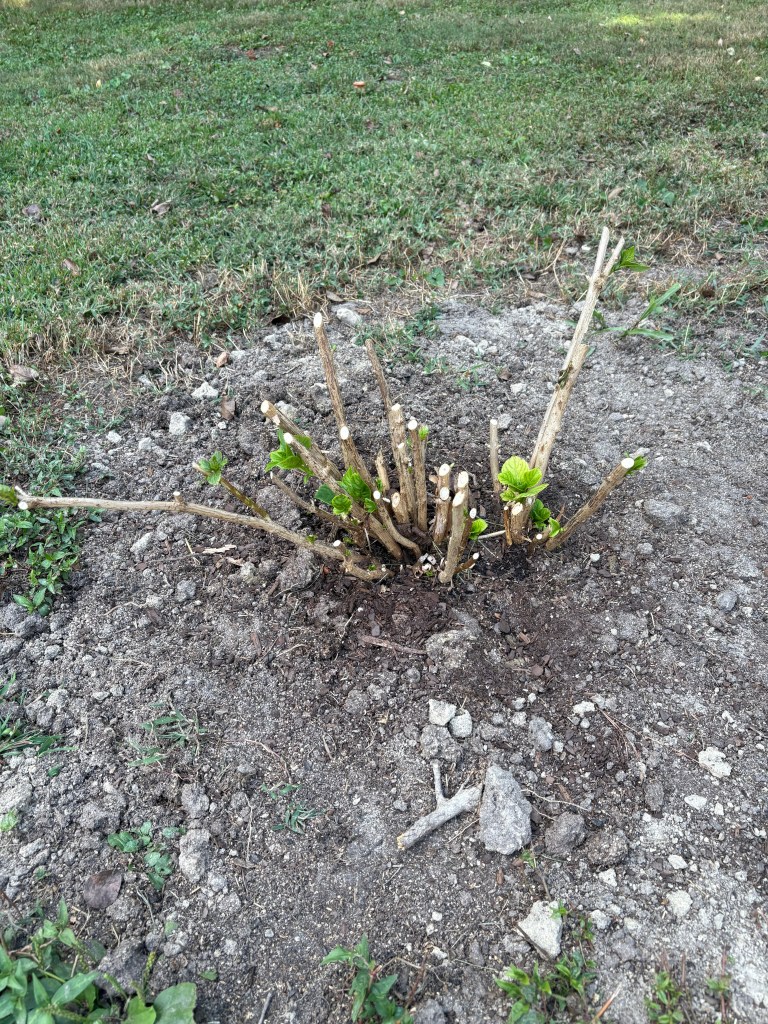
Nobody wants to spend more money on their garden than they have to, and going cheap is one way of doing things, such as splitting what plants you may have. Here in Midlothian we have a large garden with nothing much in it. Yet we do have some things that, on reflection, are worth a second look. We retrieved some tired hydrangeas lost in an abandoned border around the house. Once extracted from a tangle of buried plastic sheeting (a ridiculous attempt at weed suppression), they looked even worse; but, being hydrangeas, the roots tended to separate and gave us ten new plants without too much sweat and swearing. The larger plants we put back in the garden sans plastic), the smaller we potted on to re-establish over winter.
Splitting plants is of course hardly a new idea. Before nurseries and disposable incomes, gardeners thought of nothing else. The idea is becoming commonplace once again. Monty Don, the presenter of Gardeners’ World, the BBC’s long-running TV show, is tireless in advocating plant splitting, including buying end of season perennials and potting on as many as six or eight cuttings per plant.* So gardening on the cheap is not gardening in a “cheap and nasty” way, but gardening intelligently, and above all with an eye to regenerative practices, the “cheap and cheerful” way, in other words – sustainably.
The principal argument I want to advance in this blog is that there is no contradiction between gardening sustainably and gardening as our grandfathers and great-grandfathers did. My own maternal grandfather gardened West Hallam, Derbyshire in this way, growing flowers in his front garden, and using an extensive back garden to grow fruit and vegetables that my grandmother used expertly to feed her seven children. The only fertilizer he used was blood and bone, and that sparingly, as it was very expensive, while grandmother used every part of the vegetables that flowed from the garden as an important part of the household economy. Much of this wisdom is lost in England now, as in the rest of the world. But pockets remain. A year or so ago I walked the Camino de Santiago in Northern Spain, the ancient pilgrimage trail from Saint-Jean Pied de Port on the French border to Santiago de Compostella, the shrine to the remains of the apostle Saint James. Walking through almost abandoned villages and towns that had prospered in the 1000 years the Camino had flourished, yet were now derelict, you could still see traditional gardens between semi-derelict houses. It was spring and the residents were preparing the ground for planting. I treasure a couple I saw returning from their plot one evening. I had watched several similar couples in action – the man working a rotovator (or digging), and the wife following behind picking out stones or positioning poles for support of such vegetables as beans or tomatoes.
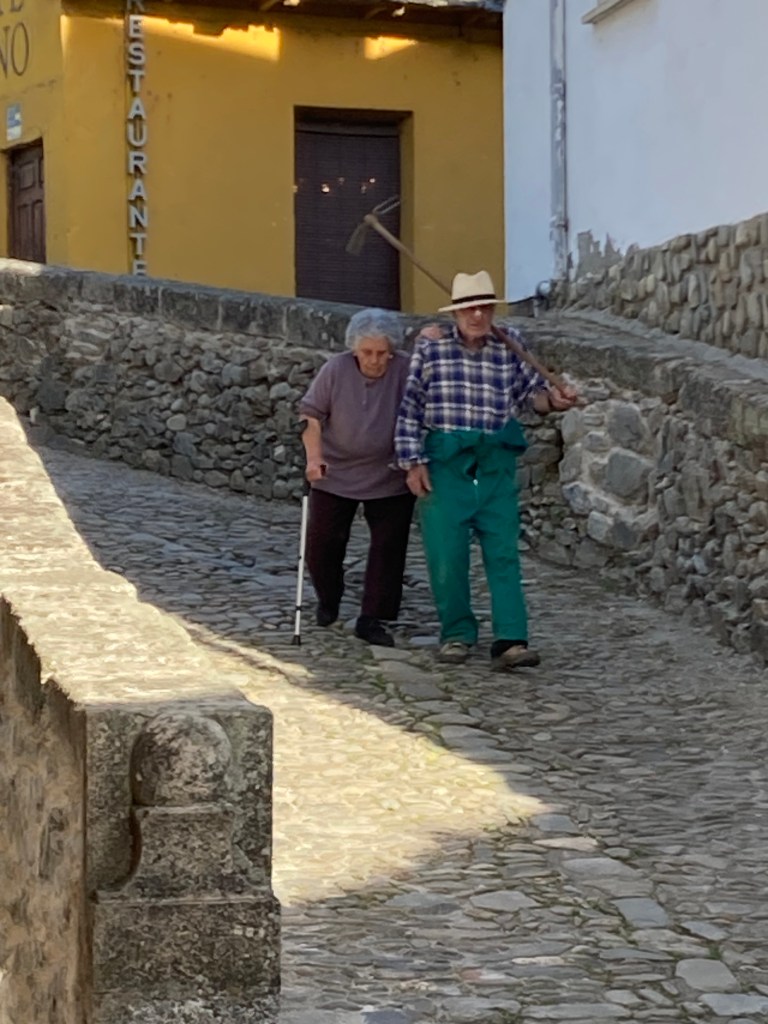
I am not suggesting the work was easy, or that their way of life was a romantic idyll preferable to what most of us experience. Yet it was indisputable that they were following a pattern of behavior that provided nutrition, sustainability, and satisfaction for those who wanted it. What I learned resonated with what I recalled watching my grandfather garden. It was something both unquestioned and yet redolent of inherited intelligence. It provided food and aesthetic pleasure, and the satisfaction of taking care of yourself and the planet that leaves our decadent and off-hand approach to food subject to the laws of capitalism, none of which are remotely conducive to sustainable gardening. Whatever the answer, we desire to recuperate as much of this lost world as possible, to grow vegetables, pollinator flowers, provide habitat for birds and insects, reduce the areas of lawn, plant trees for shade cover – to simplify our relationship to nature, and recognize the symbiotic relationship between humans and animals.
Expect another post shortly as we should be taking delivery of 10 cubic yards of compost to prepare our 40’ x 25’ vegetable garden for next spring in the next few days!
* Gardeners’ World is available on Britbox via Prime, and worth every cent of the subscription.
 A Garden in Virginia
Leave a comment